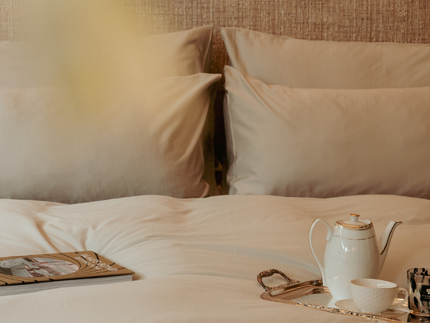




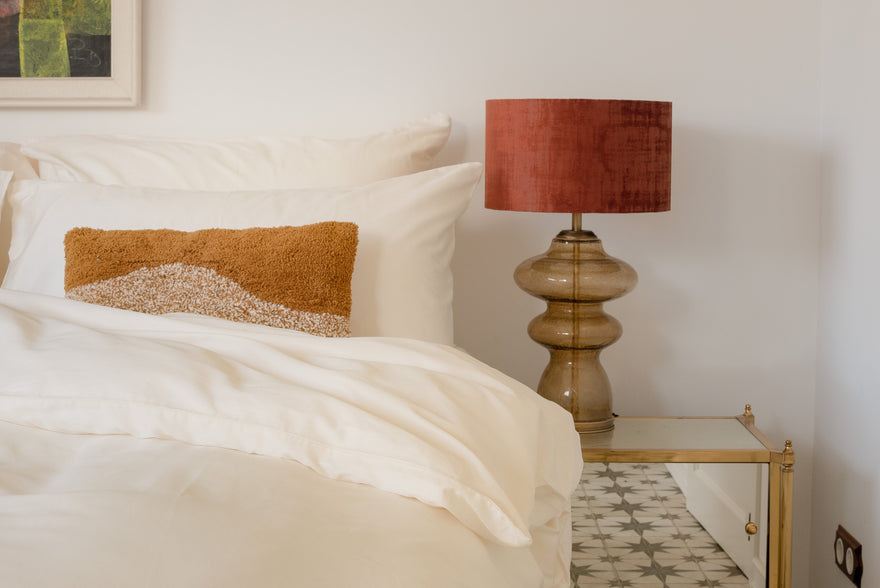
At DOUXE we work exclusively with Egyptian cotton. In other words: all the cotton you find with us comes from Egypt. Besides sounding very exotic and sleeping very well, that actually means something. Curious about all the ins and outs of our cotton? Do read on; we will tell you all about it.
Including our housekeeping tips for looking after the cotton properly.
Egyptian Cotton
To get straight to the point: Egyptian cotton is the best type of cotton in the world. Exceptionally soft, light and durable too. Triple jackpot, in other words. The difference from ordinary cotton is a fairly technical story, but the short version is that it stands out for its long fibres and great purity.
Genuine Egyptian cotton comes from Egypt. The unique climate, the fibre and the production process ensure the unique softness and superior quality of Egyptian cotton. The fibres used for Egyptian cotton can only grow in a specific climate. The Nile Delta, with its moist, rich soil, many hours of sunshine and cool nights, offers the perfect habitat for this. This enormously fertile area gives the cotton plants ideal growing conditions and provides them with a constant supply of nutrients. As a result, the fibres in the plants grow faster and, above all, longer.
Hand-picked
That extra long fibre is what distinguishes Egyptian cotton from regular cotton. This (extra) long fibre is a super strong and incredibly soft fibre. The longer the fibre grows, the thinner and smoother the fibre becomes. Subsequently, various steps in the production process provide the ideal conditions for a soft and pure end product of top quality.
Egyptian cotton is picked by hand, so the cotton fibres are chosen with great care and are less likely to break. This ultimately has a positive effect on the quality of the cotton. The cotton fibres are then combed to remove loose fibres and particles. Then the cotton is spun into yarn without any impurities. A very important process. Cotton that has not been spun properly contains impurities that remain visible in the fabric of the finished product. Over time, these impurities degrade the quality of the material and cause the fabric to pill. The quality of the fabric also largely depends on the number of threads used.
Certificate of authenticity
Previously, Egyptian cotton had no ‘quality mark’. Unfortunately, there has been, and sometimes still is, abuse by producers who label cotton as Egyptian cotton but do not offer the quality and benefits of pure Egyptian cotton. The Egyptian Cotton Association guarantees the authenticity of Egyptian cotton by verifying all products that claim the Egyptian cotton label with a ‘DNA certification process’.
Naturally, all Egyptian Cotton duvet covers and fitted sheets from DOUXE are 100% DNA certified and may therefore bear the Egyptian Cotton™ trademark.
4 tips for looking after Egyptian Cotton
Of course, our aim is to let you enjoy your Egyptian cotton bed linen for as long as possible. A few things are important to know, because the products may be divine, but cotton fibres can still be damaged if we handle them too roughly.
The right way of washing, drying and ironing therefore extends the life of your favourite bed linen set. What’s more, the colour stays beautiful if you go about it properly. We all want that, don’t we? Hence, here are a few housekeeping tricks.
1. Everything has a first time: washing
The good news is: Egyptian cotton (almost) never fluffs, pills or roughens and stays silky soft after every wash. In fact, it only gets softer, suppler and more beautiful. You do need to lend a hand, starting with the washing.
Wash your new set of bed linen the first time in cold water and the next three times at 30 degrees Celsius. Once you have done that, you can switch to (a maximum of) 60 degrees. The reason? Cotton is more likely to shrink during the first few washes.
Always wash your bedding inside out as well, and do not use fabric softener or other chemical products. That way you make sure the colour is well preserved. Always wash at a low spin speed too, and preferably use an anti-crease programme.
2. Drying: preferably outdoors, otherwise on setting 1
We recommend air-drying duvet covers, fitted sheets and pillowcases made of Egyptian cotton (and in fact all other fabric bedding too) as much as possible. That is the least harmful, and - a nice bonus: Egyptian cotton dries very quickly. A small effort to also get that fresh, pure scent into your bedding. Percale cotton has a tendency to crease easily, so we especially recommend hanging percale out to dry rather than using the tumble dryer.
Would you still rather use the dryer? Fortunately, that is possible too, but then use setting 1. Otherwise you risk the fabric shrinking here as well. That means: a short programme at a lower temperature. Take the bedding out of the dryer in good time, preferably while it is still slightly damp, as that reduces the number of creases.
And here is yet another tip: adding natural dryer balls to the tumble dryer is highly recommended. Dryer balls shorten the drying time of the laundry and act as an alternative to fabric softeners. They also ensure better air circulation, which prevents creasing.
3. Iron (if you iron) on setting 2
First of all, we recommend hanging the bedding up taut while it is still slightly damp. You will then be spared the worst creases. What’s more: far better for the environment than tumble drying.
Still want to get the iron out? That is allowed. Take the bedding out of the dryer or off the washing line slightly damp, fold it twice and then run an iron over it - setting 1 if slightly damp, setting 2 if the fabric is almost dry. A small effort, but afterwards your bedroom really does look just like a hotel.
All right, one more tip then. Not from grandmother (because it is from far after her time) but from us. In our view, one of the greatest and handiest solutions when it comes to bedding care is a handheld steamer. You remove creases from fabrics quickly and effortlessly, and you affect the fibres of the fabric many times less than with a (too) hot ironing plate. What’s more, this device is many times handier than a big ironing board.
4. Do not bleach the sheets
And finally, bleaching. You had better not do that. Bleach can weaken the natural fibres and make the cotton less absorbent. The products also lose their softness and sheen, and the colour can be affected. In other words: leave the bleach well alone. Need an alternative? Large, deep stains? Then use an alternative to bleach, such as the “All Purpose bleach alternative” from “The Laundress”.
Curious about the products made of Egyptian cotton? Take a look here or come and visit us in our store.